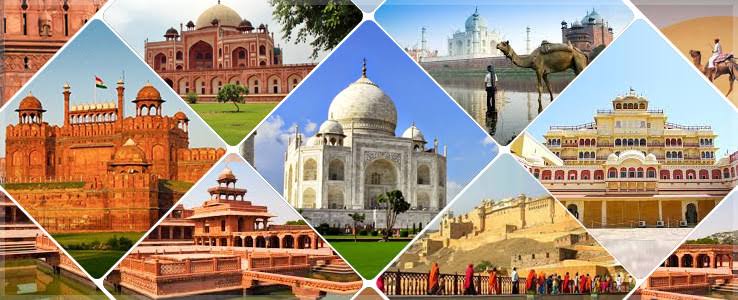
The Golden Triangle is one of India’s most popular tourist routes, particularly among first-time foreign visitors to India. The term refers to a rough triangle made up of India’s capital, Delhi; the stunningly beautiful Taj Mahal’s home of Agra; and the gateway to the culturally-rich state of Rajasthan, Jaipur.
All three cities offer wildly contrasting sights. Delhi is the hustle and bustle of a modern-day capital; Agra the remnants of the Mughal Empire, and Jaipur is home to palaces and forts reflecting Rajasthan’s regal history. Between the three cities you’ll experience India’s colonial and Mughal history, India’s more contemporary life, and a taste of what makes Rajasthan such a unique and fascinating state.
How Many Days Do You Actually Need?
Many travel agencies sell 4 day Golden Triangle itineraries and I’ve done these in the past myself. However, I’d definitely recommend allowing yourself at least 6-8 days to explore Delhi, Agra and Jaipur at a more relaxed pace if possible. It’s worth spending at least 2 full days in Delhi; 1-2 in Agra, and at least 2-3 days in Jaipur to get a good idea of each destination. If you’re pressed for time and can only allocate 4-5 days to Delhi, Agra and Jaipur I’d either skip Fatehpur Sikri (which I’ve included as an option below) or spend a little less time in Jaipur.
Delhi: Where Most Journeys Begin
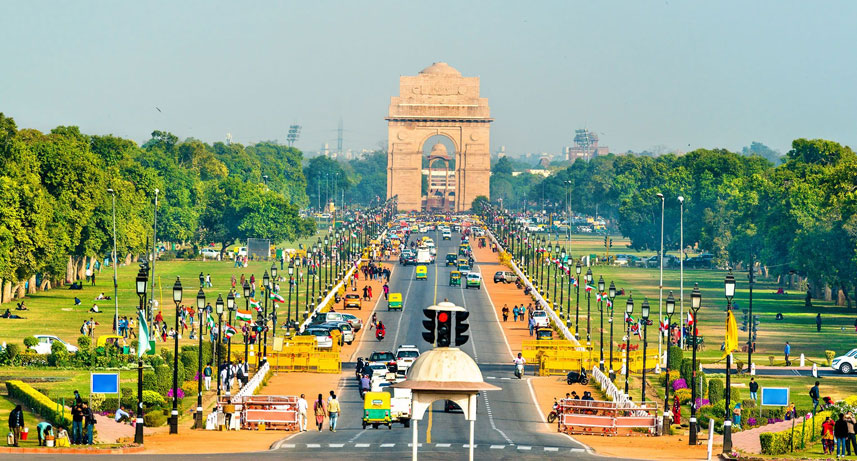
Delhi will be the most likely place to enter India if you’re arriving from another country. You can easily spend two full days exploring Old and New Delhi with plenty of time to see Delhi’s major sights. It’s important to make sure you’re spending some time exploring Delhi on foot so you’re not just experiencing it through the windows of a rickshaw/taxi!
Here are some highlights:
- Explore the bustle of Chandni Chowk, one of Delhi’s oldest markets, on a cycle rickshaw ride through the lanes.
- Visit the Red Fort, Delhi’s Mughal-era fort and the symbol of Indian independence, in the morning before the heat and crowds pick up.
- Don’t leave Old Delhi without visiting the beautiful Jama Masjid, India’s largest mosque.
- Head to Paranthe Wali Gali for delicious, filling, cheap parathas.
- Get lost in Delhi’s wonderfully crazy spice market.
- Stroll down Delhi’s broad, colonial-era avenues in New Delhi.
- Visit India Gate, Delhi’s war memorial.
- Catch the Lotus Temple changing colors in the evening or visit it in the morning.
- Admire Humayun’s Tomb, the inspiration behind the Taj Mahal.
- Catch a sunset from Qutub Minar, a 12th-century minaret.
Delhi can be incredibly frustrating to explore as the traffic is unpredictable. Allow yourself more time between sights than you think is necessary (and more than Google Maps will tell you!). Traffic is worst in the morning and evening so you may find it easiest to see Humayun’s Tomb and India Gate etc. around lunchtime as you’re unlikely to be caught up in the worst of the rush hour traffic.
Agra: The City Built Around One Monument

Agra is famous for the stunningly beautiful Taj Mahal but there’s plenty else to see here too. Allow yourself 1-2 days here, and you’ll be able to explore its main sights. See the Taj Mahal at sunrise when the monument changes colors with the light. The monument opens roughly thirty minutes before sunrise to secure a good viewing point. Sunrise is the best time to see the Taj, as not only will you beat the crowds, it’s far too hot during the day to enjoy the monument! Explore the mighty red sandstone Agra Fort. During his final years the emperor Shah Jahan was kept prisoner here by his own son overlooking the Taj Mahal, the monument he’d built.
Fatehpur Sikri: a bonus stop en route to Jaipur

If you do happen to have a spare day, Fatehpur Sikri is well worth a visit en-route from Agra to Jaipur. This perfectly-preserved Mughal city was supposedly abandoned shortly after it was built due to a lack of water. It’s about a 40 minute drive outside of Agra city so is easy to visit on the way to Jaipur.
Jaipur: Rajasthan’s Royal Introduction
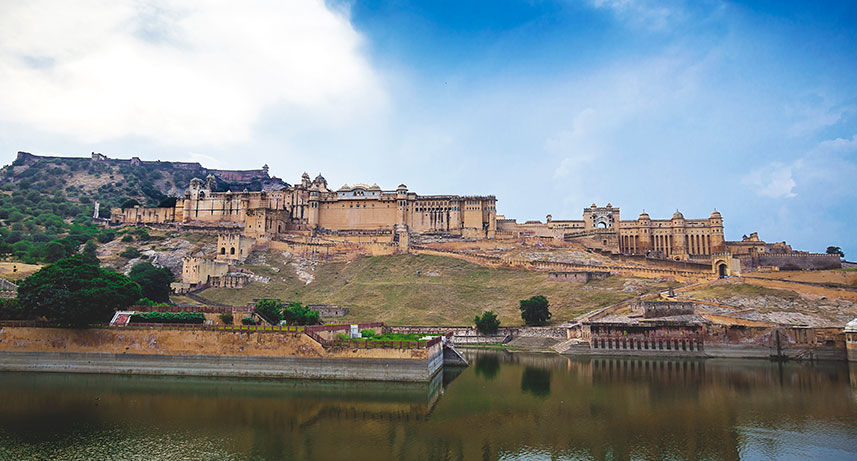
Jaipur’s Pink City gets its nickname from the city’s old fortifications having been painted in 1876 to honor a visit from the Prince of Wales. Jaipur is a fantastic introduction to Rajasthan, boasting palaces, bazaars and the mighty Amber Fort. Allow yourself at least 2-3 days in Jaipur and you’ll be able to travel at a more relaxed pace, visiting the mighty Amber Fort could easily take up half a day alone.
- Visit the mighty Amber Fort in the morning to beat the heat and the crowds. You can reach the top of the fort on an elephant ride although some people, including myself, opt to walk up due to animal welfare concerns.
- Visit the gorgeous City Palace, parts of which are still lived in by members of the royal family. This is a wonderful insight into the regal lifestyle of Rajasthan.
- Photograph the wonderfully quirky Hawa Mahal, or Palace of Winds. It’s definitely better from the street than wandering around inside!
- Get a feel for traditional Rajasthan in the bazaars of the old city.
- Pick up some beautiful souvenirs from Jaipur, try Johari Bazaar for jewelry; Bapu Bazaar for textiles, and look out for its famous blue pottery.
Should You Book a Package or Travel Independently?
India can be a bit overwhelming when it comes to planning. From dealing with difficult driving conditions and language barriers (except for touristic areas), India calls for well-thought-out planning. We always recommend hiring a package tour when traveling to India for the first time. Connecting trains (Delhi-Agra/Jaipur and Agra-Jaipur) sell out weeks in advance especially in peak season (October – March), hiring private drivers could be risky (unless you know the person), and it’s always better to have someone who has been to places like the Taj Mahal many times before and knows what’s going to work for your travel dates and when you can avoid the biggest crowds. A good India based tour operator will take care of all of that, making sure you have a good and reliable private driver, arrange for skip-the-line tickets for monuments, and you’ll always be able to reach out to them in case of emergencies (even at 11pm!). Most of the operators will offer Golden Triangle tour packages that are customizable as well, and we do the same! Do share with us if you need help in customizing the itinerary depending upon the number of days, budget, pace of sightseeing and more!
Though you can also go on an independent trip, especially if you are an experienced traveler who is okay with uncertainties. Do take into account, however, that such a trip calls for meticulous planning!
Common Mistakes First-Time Visitors Make
Not accounting for the heat: We’ve already touched upon the best time to visit India and how November – February is the only time you can comfortably explore Agra and Jaipur in the afternoons as well. Sightseeing should ideally be done in the mornings and evenings only unless you’re visiting India during winter.
Traveling with a 4 days Golden Triangle itinerary: This is what travelers tell us they wish they hadn’t done the most! The entire experience becomes a race against time to tick off one site after another as you run against the clock to fit in more. We highly recommend slowing down and enjoying India at its own pace, and you’ll thank us for it!
Missing out on Fatehpur Sikri and Humayun’s Tomb: Travelers are quick to include Taj Mahal in Agra and Amber Fort in Jaipur on their must-visit list, but miss out on monuments like Fatehpur Sikri and Humayun’s Tomb. These sit in the shadow of the Taj Mahal and Amber Fort, but both are genuinely memorable and far less crowded. Visiting Fatehpur Sikri (or Humayun’s Tomb) would be akin to visiting Taj Mahal except with lesser crowds!
Underestimating travel times: Traffic can get bad in India especially in touristy cities like Delhi and Jaipur! Travel times can be much longer than you’d anticipate especially within cities. Always plan your day accordingly.
Uncertainty around tipping: Tipping is different in India compared to other countries because it’s always a good idea to ask your tour operator or private driver/guide about the norms before heading out.
Best time to visit the Golden Triangle in India
The ideal time to visit Delhi, Agra and Jaipur is from October to March. Days are pleasant and skies are clear! Mornings can get cold in December and January and Delhi is also known to have a blanket of fog during these two months, so sightseeing can’t begin too early in the morning. We’d still say October and even February/March are probably the best months to visit India when weather is pleasant and skies are clear! Summers in India (April to June) are extremely hot and Monsoon season (July to September) can be planned around if you have the luxury.
Final Thoughts
The Golden Triangle in India covers Delhi, Agra and Jaipur, three historical cities each distinct from the other, yet complementing each other beautifully. We hope you enjoyed reading through our travel guide on India’s Golden Triangle and do reach out to us if you need help planning a trip to India. We’d be delighted to help!