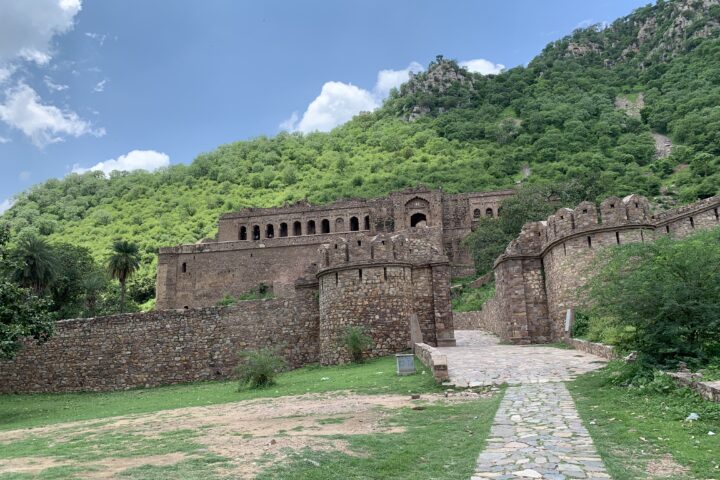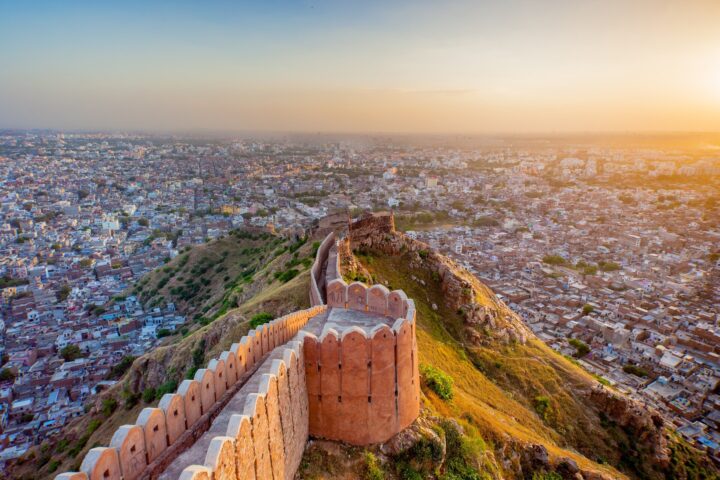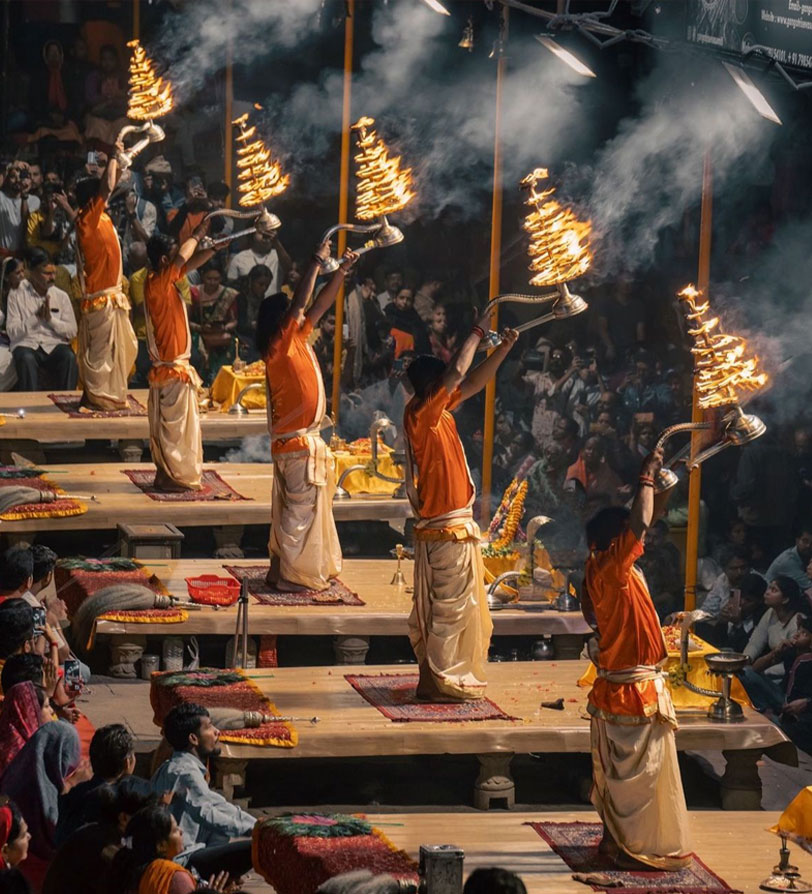

Perched on the desert like a mirage cut out of a honey-coloured stone, Jaisalmer is one of the few remaining places in the world where you can still walk into a hundred-year-old fort and see people cooking on rooftop kitchens, running shops from the ground floor of havelis and hanging laundry between carved sandstone balconies. Then there are camel safaris through rolling sand dunes, folk music at night in the desert, and some of the best stone carving in India and it’s no wonder that Jaisalmer is now a popular destination for foreign visitors to Rajasthan.
This guide is for the first-time foreign visitor to the country, and contains all the information that will be required to know: what to do, when to do it, how to get there, what things are worth spending money on, and tips to save a few times, money, and a few rookie blunders.
Jaisalmer is an integral part of the Rajasthan tour. Jaisalmer is essential in the Rajasthan tour.
Located in the far west of Rajasthan, near the Pakistan border, in the middle of the Thar Desert, Jaisalmer is also known as the “Golden City”. It got its name from the yellow sandstone of the fort and havelis that glimmers with amber-gold at sunrise and sunset.
The fort of Jaisalmer is not just a museum, it is indeed one of the few “living forts” remaining in the world. About one-quarter of the population of the old city still lives within its walls, so during your visit you will see all the elements of history combined with everyday life: children playing cricket in courtyards of the forts, spice shops nestled next to 800-year-old temples, rooftop cafes with views of the fort instead of the hotel.
Add to this, authentic desert scenery and you have something Jaipur, Udaipur and Jodhpur can’t quite match: a real edge-of-the-map feeling in Jaisalmer.
Getting to Jaisalmer
Although Jaisalmer is far from the reach of Indian people, it is easy to reach it.
By Air: There is limited but improving air connectivity at Jaisalmer Airport primarily from seasonally from Delhi and Mumbai through Jodhpur. People still arrive at the Jodhpur Airport and then take to road and rail.
By Train: Jaisalmer is connected to Jodhpur, Jaipur and Delhi by overnight trains. The Jaisalmer – Delhi train route is a favored route for foreign backpackers and the sleepers or AC trains are comfortable for the trip.
By Road: Jaisalmer is 5-6 hours drive from Jodhpur and around 15 hours drive by car from Jaipur or Delhi. For traveling with other cities of Rajasthan, hire a private car with driver as it is the most flexible way to reach the desert campsites outside of town.
Rajasthan is the last place most foreign visitors to the state visit or the almost last, as they travel to and from other parts of the state, mostly to Udaipur, and then back to Jodhpur and Jaipur and finally to Delhi. However, if you do not want to arrange this trip on your own, this is where Rajasthan Tour packages come in handy; they package your entire travel itinerary including transport, hotels, guides and desert camp stays all in one package, something that first-timers might find useful when negotiating long distances across the state.
Best Time to Visit Jaisalmer
It is important to note that Jaisalmer is one of the hottest areas of India, and thus, timing is crucial, to a large extent, than almost any part of Rajasthan.
This is the best time of year, from October to February. This is a good time of the year for camel safaris, desert camping, and the temperature is not too hot in the day or too cold at night (15-28°C).
The coldest nights in the desert happen in December and January; make sure to dress for cold weather if you are camping out at night.
The period between March and June is extremely hot with temperatures frequently reaching 40-45°C. Not recommended unless you have no other choice.
For an elaborate city that comes alive with colour, camel races, turban-tying competitions, folk dances and the bright lights of the Sam Dunes, one of the best times to visit is during the Jaisalmer Desert Festival (usually in February).
3000-year-old Sonar Quila, Jaisalmer Fort, is the heart of the city.Jaisalmer Fort (Sonar Quila) is the heart of the city which is 3000 years old.
A visit to Jaisalmer is incomplete without a full day, preferably two, at the Jaisalmer Fort or the Golden Fort as it is often called. The fort was constructed by the Rawal Jaisal in 1156 CE on Trikuta Hill, and is one of the only fully inhabited forts in the world, and is included in the UNESCO World Heritage “Hill Forts of Rajasthan” List.
So what you can find inside the fort:
Raj Mahal (Royal Palace): The former palace of the rulers of Jaisalmer, with latticed windows and views of the desert.
Don’t miss Jain Temples: a group of 12th to 15th century temples with extraordinarily detailed stone carving, arrive early (before 9AM) to avoid the crowds and to have better light to take photos.
Skirted bazaar streets: streets with narrow alleys filled with handicraft shops, textile shops and silver jewelry stalls.
Foreign visitors: please have practical information available:
Entry fee for foreigners is approximately ₹250 and for Indian nationals, it is ₹50, and there is an additional charge for using a camera or video.
Timings: usually 9:00 AM to 5:00 – 6:00 PM each day, but may be subject to change during festivals.
Explore thoroughly, at least 3-4 hours; 5 hours or more if you want to see the Palace Museum inside.
Please wear comfortable shoes – will be doing lots of walking up and down on the fort’s stone paths.
Don’t hire any of the private tour guides who are standing at the main gate, they will only tell you what they want you to hear, and they will charge you an excessive fee.Either hire one of the government-licensed guides at the big gate or a private one, but beware of the touts.
Remember that people actually live in the fort, so don’t get too close to people or to narrow doorways to take their pictures.
This is the place where you will discover the finest of Sandstone Craftsmanship under the name of the Havelis.
The havelis built by the merchants in Jaisalmer are no less picturesque than the fort itself, being situated just outside the fort wall. The 18th & 19th century mansions were built by the affluent trading families who prospered on these old caravan routes from India, Persia and Arabia.
Patwon Ki Haveli: the grandest and best known, which is in fact the collection of five havelis, with elaborate balconies which have dozens of them, all different!
Nathmal Ki Haveli: Two brothers, apparently working on different sides of the building, which is arranged in a slightly aspherical manner.
Salim Singh Ki Haveli, easily identified by its peacock-shaped roof and its curved shape.
Fees are usually minimal – sometimes it is possible to see the inside of most havelis for free, and others may require a fee to access the interior or rooftops – and each is best captured in the late afternoon or early morning sun, as the sandstone changes colour to a more golden hue at that time of day.
Festival: Sam Sand Dunes: The Desert Experience
Any trip to Jaisalmer is incomplete without visiting the Sam Sand Dunes, around 40 km from Jaisalmer, which does not disappoint with its rolling golden dunes, camel caravans during sunset and starry skies with minimal light pollution.
Popular experiences:
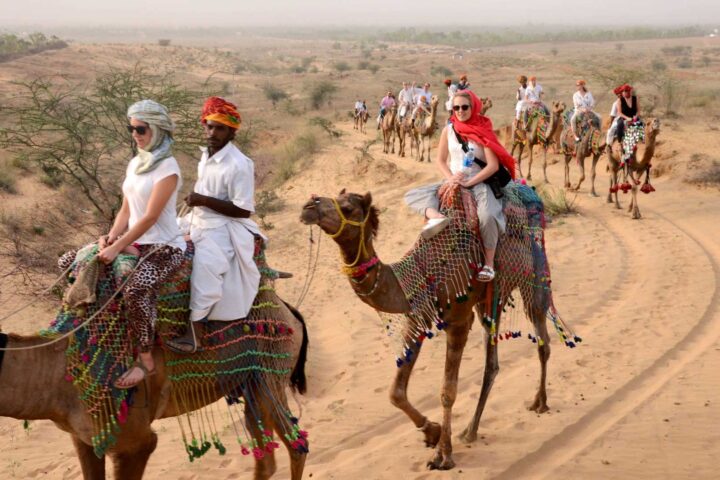
From a sunset ride of just a few hours to days long camel safaris between desert villages. It’s the most popular activity for foreign tourists at Jaisalmer.
If you don’t have much time or don’t feel like camelbacking, then jeep safaris are an alternative and a much more comfortable way to explore the dunes.
Overnight desert camps: Modern Swiss tents, cultural activities (Rajasthani folk music and folk dance) under open sky for dinner. From basic to truly luxurious camps.
Sunset viewing: Even a day-tripper can see an unparalleled sunset from the dunes without an overnight stay.
If you want a more peace and quiet dune experience, then you may want to visit Khuri village, an hour from Jaisalmer, which has a similar dune landscape, with a more authentic, low key village and smaller family owned camps.
Gadisar Lake, Other sights worthy of your time.
After the fort, havelis and dunes there are a couple of smaller sights to complete it:
The Gadisar Lake is a peaceful, artificial lake, surrounded by small temples and shrines, and a ornate entrance gate (Tilon Ki Pol) which is one of the most photographed places in the city, was built in the 14th century. Sunset boat rides are a popular and economical activity.
If you are looking for nature along with history, look no further than Desert National Park, where you’ll find the endangered Great Indian Bustard and other desert flora and fauna.
Bada Bagh: a series of royal cenotaphs (chhatris) just outside the city that are especially beautiful at dawn or dusk when the desert can be used as a backdrop.
Tazia Tower: An unusual, elaborately-stacked tower within the fort complex, constructed in the manner of processional towers in Islam.
Food to Try in Jaisalmer
Rajasthani desert food evolved around the ingredients that can withstand the intense heat and limited water supply and it is recommended to specially look for food in Jaisalmer:
- Lentils, baked wheat balls and sweetened crumbled wheat: the hallmark of the Rajasthani cuisine Dal Baati Churma.
- Unique dish of the desert of ker sangri, a combination of desert beans and berries.
- Gatte ki sabzi: gram-flour dumplings with a spiced yogurt gravy.
- Kalakand and Ghotua Ladoo: Jaisalmer is the town of milk based sweets and a visit to the sweet shop in the old city would be worth a stop.
Foreign tourists flock to rooftop restaurants with their foreign cuisine and affordable prices that face the fort.
Where to Stay
Jaisalmer has a wide variety of lodging options to suit all budgets:
Heritage hotels and havelis: some ancient havelis have been transformed into boutique heritage hotels, and are a quintessential historic experience.
Backpackers’ hostels: affordable accommodation with good facilities just outside the fort.
Near Sam Dunes, desert resorts: a nice option for those who desire a city tour and an overnight desert experience.
High-end resorts: For those seeking more comfort after days of touring, there are a few upscale properties located on the outskirts of the city with pools, spas and desert views.
What Foreign Travellers need to know:
These are a few things that will make your journey to Jaisalmer easier:
Modest clothing: lightweight, loose, breathable and covering shoulders and knees is both respectful and practical in the heat of the desert.
Bargain at markets: haggling at the market is expected and with camel/jeep safari operators, begin with around 40-50% of the quoted price.
Use cash: although more and more places accept card payments, small shops, camel operators and rural camps often require cash (Indian Rupees).
Remember to drink plenty of water, and even in winter, the desert sun is strong – take a water bottle and sunscreen.
Good camps are full for desert camps in peak season (December-January and around the desert festival).
Always check the safari company’s and camp’s reputation before paying up — check for recent reviews and where possible, choose a tour and travel agency in India rather than a street tout, especially for overnight trips in the desert where standards of safety and comfort are not uniform.
A 3-day trip to Jaisalmer is recommended, allowing you to experience its unique attractions in detail.
Day 1: Arrival, settle in and explore Jaisalmer fort in the afternoon, Sunset view from a rooftop café in the fort.
Day 2: The second day features a visit to Patwon Ki Haveli and the other most important havelis in the morning, followed by a visit to the Gadisar Lake in the afternoon and a transfer to Sam Sand Dunes where a camel safari and an overnight desert camp with folk dances take place.
Day 3: Head out to see the sun rise on the dunes, back to the city, visit the cenotaphs at Bada Baugh, and free time for shopping in the fort bazaars and then off.
This pace is good & proper for a self-contained tour or it can be used as the concluding part of a longer tour around Rajasthan.
Planning Made Easier
Logistics, or the planning for moving from one city to another, bookings at the Jaisalmer desert camps, etc., is more involved as compared to a visit to a regular city, due to the remoteness of Jaisalmer. If you are a first time traveller to the Rajasthan Tour, it is worth hiring through a well-reviewed Jaipur Jodhpur Jaisalmer Udaipur Tour packages which can even cover the entire tour circuit of the Rajasthan desert, providing you with transport, accommodation and desert safari in a single single go, thus eliminating the hassle of arranging these things separately. Working with a well-established tour and travel company in India is overall a safer and reliable way to create a fully custom tour, particularly if you are planning on spending the night in the desert or a long nights drive.
Final Thoughts
Jaisalmer rewards travelers who give it time. Rush through in a day and you’ll see a fort and some dunes; spend two or three days and you’ll understand why this remote desert outpost has captivated travelers for centuries — the golden light on sandstone carvings, camel bells fading into the dunes at dusk, and a night sky with more stars than you knew existed. Plan around the cooler months, book your desert camp ahead of time, and give yourself room to simply wander the fort’s lanes without an agenda. That’s when Jaisalmer really shows itself.