Every first-time visitor to India hits the same fork in the road sooner or later. You open a map, look at the sheer size of the country, and wonder: do I start with the palaces and mountains of the north, or the beaches, temples and backwaters of the south?
I’ve had this conversation with friends, relatives and complete strangers at train stations, and I can tell you there’s no single right answer. But there is a right answer for you. It depends on your travel style, the season you’re going, how much time you have, and what you want to feel when you step off the plane. Let’s work through it properly.
First, Understand That India Isn’t One Destination
The biggest mistake travelers make is treating India like a single country with a single personality. It’s closer to a continent. The north and south differ in language, food, architecture, climate, and even the pace of daily life.
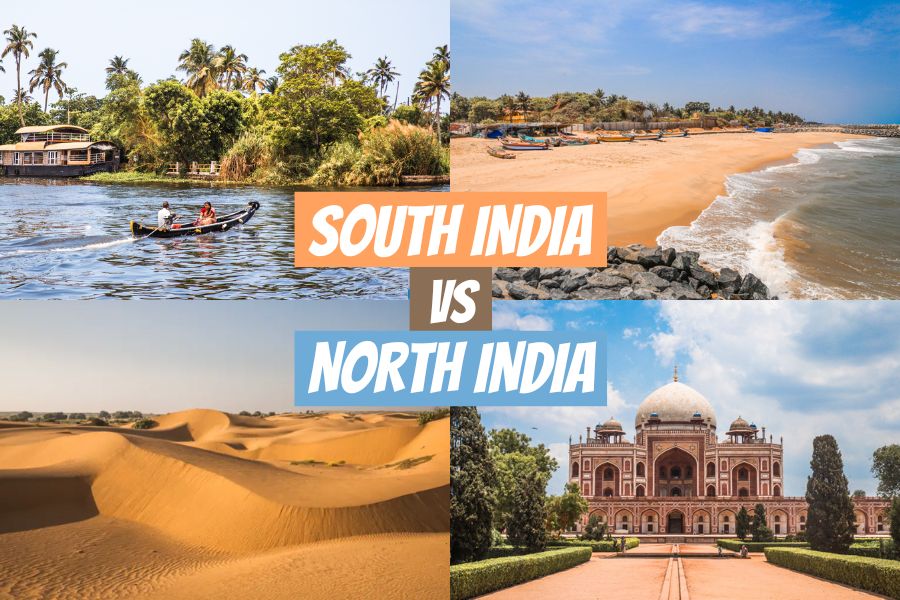
The north is loud, dramatic and layered with centuries of Mughal and Rajput history. The south feels greener, calmer and more rooted in ancient temple traditions. Neither is better. They’re just different, and that’s exactly why the order in which you see them matters.
North India: The Grand, Busy, Unforgettable Introduction
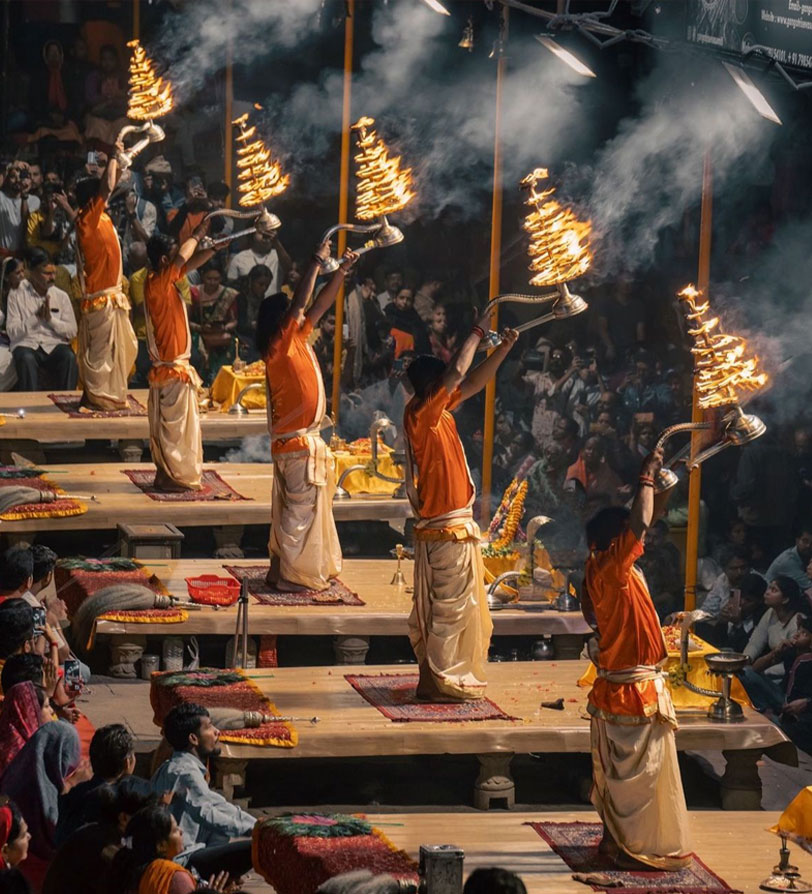
When people picture India, they usually picture the north. The Taj Mahal at sunrise. Camels in the Rajasthan desert. The Ganges at Varanasi, with lamps floating on dark water. The Himalayas rising behind a hill town.
The famous Golden Triangle of Delhi, Agra and Jaipur is where most first-timers begin. Delhi gives you a crash course in everything: Mughal tombs, colonial boulevards, tangled old-city lanes and some of the best street food in the country. Agra gives you the Taj Mahal, which, despite the crowds and the photographs you’ve seen a thousand times, still manages to quiet people down when they see it in person. Jaipur, the Pink City, adds forts, bazaars and block-printed textiles.
Go further and the north keeps surprising you. Udaipur has its lake palaces. Jodhpur has the blue lanes and the towering Mehrangarh Fort. Jaisalmer glows gold at sunset. Rishikesh offers yoga and river rafting, Amritsar the Golden Temple, and Himachal and Kashmir the mountains.
The honest downside: the north can be intense. There are more touts, more crowds, more honking, and more people asking if you need a taxi. Some travelers love that energy. Others find it exhausting in the first few days. It’s not dangerous, just a lot, and it helps to have someone to guide you through it.
This is where a well-planned North India tour package earns its keep. A good one handles the logistics, such as trains, drivers, hotel check-ins and entry tickets, so you can enjoy the sights without arguing over auto-rickshaw fares at 7 a.m.
South India: Slower, Greener, and Surprisingly Soothing
If the north is a dramatic opening act, the south is the exhale.
Kerala is usually the star. Houseboats drift through the backwaters of Alleppey, tea and spice plantations cover the hills of Munnar and Thekkady, and the beaches of Varkala and Kovalam sit under palm trees. Ayurvedic retreats here are genuinely good, not just a tourist gimmick.
Tamil Nadu is the cultural heavyweight. The Meenakshi Temple in Madurai and the Brihadeeswarar Temple in Thanjavur are staggering pieces of Dravidian architecture, covered in carved figures and painted in vivid color. Pondicherry adds French-colonial charm, and Chennai offers a strong dose of classical music, dance and city life.
Karnataka gives you Hampi, an ancient ruined city scattered among boulders that looks like a film set, plus Mysore’s illuminated palace, Coorg’s coffee estates, and the tech-driven buzz of Bengaluru. Goa, technically on the western coast, often gets bundled in too. And if wildlife interests you, the national parks of the Western Ghats are worth a day or two.
The honest downside: distances between the major highlights can be long, the heat and humidity can be heavy in the wrong season, and the monuments, while magnificent, are more temple-focused. If you’re not especially into temples, you may want to balance them with beaches, hills and food.
Travelers who want a smooth route through all this often look for a South India tour package, because the highlights are spread across several states, and linking Kerala, Tamil Nadu and Karnataka efficiently takes some local knowledge.
Let’s Talk About Food
Food matters more than people admit when choosing a destination.
In the north, expect rich, creamy gravies, buttery naan, tandoori meats, dal makhani, chole bhature for breakfast, and sweets like jalebi and kulfi. It’s hearty, comforting and often heavy. Vegetarians do very well here, and so do meat-eaters.
In the south, the flavors shift. Think rice, lentils, coconut, curry leaves and tamarind. Dosas, idlis, sambar and filter coffee are everyday staples. Kerala adds seafood curries and appam with stew, while the Chettinad region in Tamil Nadu is famous for fiery, aromatic dishes. The cuisine is often lighter and easier on the stomach, though definitely not always milder.
If you’re nervous about food, starting in the south may feel gentler. If you want to dive straight into indulgence, the north won’t disappoint.
Weather: The Factor That Decides More Than You Think
Timing might be the single most practical way to decide.
North India is at its best from October to March. Days are pleasant, evenings are cool, and the Golden Triangle is comfortable for walking. Winters can get genuinely cold in Delhi and chilly in Rajasthan at night, so pack a jacket. Summers from April to June are brutal in the plains, with temperatures often crossing 40°C. The monsoon follows, and the mountains are best in spring and early summer, when the plains are too hot.
Weather in South India is warm throughout the year but the best time to visit is from about November to February when it is dry and windy. June to September is an ideal time to visit Kerala, a monsoon period characterized by abundant greenery and beauty, as well as the season for Ayurvedic treatments, although it is also the season for plenty of rain. The summer season (March–May) is hot and humid.
If you’re travelling in December or January, both areas are good, but in the north it could be foggy and cold, but in the south it could be perfect. In summer, it is better to go to the south or the Himalayan north (not the plains).
Budget and Pace
The two regions may be implemented on a very low budget or on heritage palaces or luxury resorts. High-end, heritage lodging in general is to be found in the north and excellent value is to be found in boutique homestays and plantation bungalows and wellness resorts in the south.
Pace is the bigger difference. Typically, any northern Indian trip will be cramped: early rising and lengthy drives to other cities, and lots of monuments. A south Indian itinerary can be planned around more leisurely days, a morning spent in the temple, an afternoon spent on a houseboat and an evening spend on the beach. If you want to unwind, it’s easier in the south. When it comes to exploring big ticket sights in large numbers, the north offers the answer.
So Which One Should You Visit First?
Here’s how I’d break it down.
Choose North India first if:
- It’s your very first trip to India and you want the iconic experiences.
- You love history, forts, palaces and big monuments.
- You’re traveling between October and March.
- You want photographs that make people back home say, “Wait, you were there?”
Choose South India first if:
- You’d like an easier, calmer introduction to the country.
- You care about nature, beaches, backwaters and wellness.
- You enjoy food that’s lighter and rice-based.
- You’re traveling with older parents or kids who need a gentler pace.
- You’re an experienced traveler who has seen the Taj and wants something different.
Well, from a personal standpoint, if it’s a first time visitor, I’m on the conservative side and I say north! Back to the south on your second visit, it’s a well-deserved holiday; the Golden Triangle is the “wow” of a long flight. But I have met people who began in Kerala, became in love with the slower tempo and never wanted to rush up north. The rules are less important than your gut.
Working with a travel agency makes it easier for several reasons.There are several reasons why it is easier to work with a travel agency.
India rewards preparation. Train tickets go quickly, the most popular hotels are booked up months ahead of time, and the distances on a map can be deceiving. This is the reason that most tourists opt for a trusted tour and travel agency in India rather than assembling the tour themselves.
A good agency will do more than book rooms. It’s creating a timetable that’s not going to waste your time, knows which time of year to visit, organizes English-speaking guides, makes sure to arrange airport transfers, and will have someone to call on the off chance that something does go wrong—which it will, in India. This type of back up is invaluable, particularly for the first journey.
If you are considering different options, consider transparent pricing, clear itineraries, genuine reviews and flexibility. The truly excellent packages allow for breathing room. A North India tour package should leave you inspired, not tired, after you return home after your 10-day sojourn. Similarly, a tour package in South India should not miss out on the culture, nature and leisure time in the packages, but just go through the checklist and visit all the temples.
If you have limited time, a lot of agencies provide packages that let you experience both Rajasthan and Kerala in a single trip as well. It’s big but it’s achievable if you plan it right.
Here are a few tips for going out safely
Light, breathable clothing, plus a scarf or shawl for temples and a light jacket for the colder nights in the north. Bring a water bottle and consume only water that comes in a bottle or from a water filtration device. Download offline maps. For tips and small purchases, keep some small notes. Most importantly, allow yourself to take your time. India is not a place for a fast track.
Learn some local words as well! Just a nod of the head in the north or “vanakkam” (literally, hello) in Tamil Nadu makes you a lot of friends and people will treat you with much warmth.
Final Thoughts
There are no rivals between North India and South India. They’re two distinct chapters of the same book and the sequence in which they will be read is for the reader to determine, based on taste, timing and temperament. For grandeur and history, head north. For those who want to experience peace, greenery and taste, head south. Whatever happens, you’re going to want to plan the second trip before the first one ends.
Open that map once again, get to the chapter that you’re most interested in, and get planning. The Indians have waited several thousand years. Let it wait for a couple more months until you have your travel plans sorted.